A Residency-Style Model for Functional Medicine: What Makes the Kalish Institute Different and Why It Works
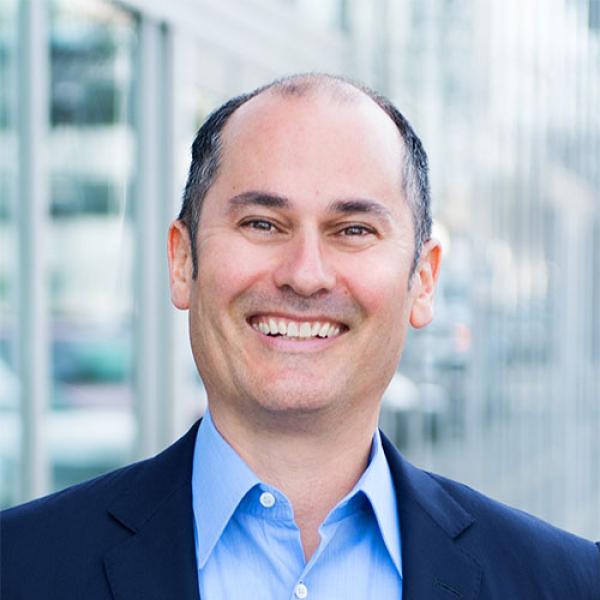
by Dr. Dan Kalish
If you've been in functional medicine for a while, you've seen the pattern: A clinician gets inspired, completes a course, downloads protocols… and then Monday morning hits. Real patients. Real complexity. That "simple" fatigue case becomes a tangled web of gut dysfunction, hormone imbalances, immune activation, toxin burden, and a nervous system stuck in fight-or-flight. You have the knowledge. But what do you actually do first?
It’s not a knowledge problem. It’s a training model problem.
Most medical education—conventional or functional—relies on information transfer: lectures, slides, facts, and marker lists. But what actually creates confident clinicians isn't more information. It's repeated clinical decision-making within a proven system.
Every professional healthcare program includes a residency—supervised clinical training where you practice under expert guidance. That's where real competence develops.
Students at the Kalish Institute translate knowledge into action in real time. We've built an online residency-style model for functional medicine that provides the supervised experience phase of your training. Not just "learning functional medicine," but mastering its practice through mentored decision-making and case-based learning.
Why Functional Medicine Training Often Falls Short
Functional medicine attracts high-achievers: smart clinicians, curious minds, and compassionate healers who care deeply about patient outcomes. When implementation fails, it's tempting to blame the practitioner. But the real culprit is usually structural.
The Five Training Gaps That Prevent Implementation
1. Topic-Based, Not Decision-Based Organization You learn gut health, hormones, detox, and mitochondrial function as separate topics—but not how to sequence them for a real patient in the order that drives actual progress.
2. Theory Without Application You can explain calprotectin's role in inflammation, but you don't know what to do with a borderline elevated result in a patient with mixed symptoms and a limited budget.
3. Insufficient Pattern Recognition Clinical mastery requires repetition—seeing core dysfunctions appear in different presentations until you recognize and respond to them instinctively.
4. No Framework for Managing Complexity Functional medicine is fundamentally a complexity discipline. Without an organizing framework, clinicians either freeze in overwhelm or chase trendy protocols without strategic direction.
5. Lack of Mentorship The hardest part isn't the lecture—it's applying concepts to difficult cases and having an experienced clinician refine your thinking in real-time.
A residency model solves these problems by design. It's not just information transfer—it's mentored decision-making within a repeatable clinical structure.
This is the model we've built at the Kalish Institute, adapted for functional medicine and modern practice realities.
What "Residency-Style" Actually Means
At the Kalish Institute we’re replicating the elements that actually build competence:
- Clear clinical frameworks that organize complexity
- Case-based reasoning with real patient scenarios
- Sequencing and prioritization training
- Repetition with variation to build pattern recognition
- Expert mentorship and feedback on your clinical thinking
- Practical implementation within real practice workflows
The goal isn't just making you smarter—it's making you clinically effective.
Residency-style training creates clinicians who navigate uncertainty and make sound decisions consistently. That's exactly what functional medicine demands.
The Kalish Institute Difference: Five Core Principles
1) We Train a Clinical Operating System, Not Disconnected Topics
Most programs teach content like textbooks: chapters on body systems, biochemical pathways, and protocols. At the Kalish Institute we teach something fundamentally different: a clinical operating system—a systematic way to think through cases.
Functional medicine isn't about "What do I know?" It's about "What do I do first, and why?"
The Kalish Institute framework helps you:
- Identify dominant patterns (not just isolated abnormalities)
- Sequence interventions strategically (what actually moves the needle first)
- Avoid overwhelm for both you and your patients
- Make clinically rational decisions, not trendy ones
- Track progress effectively and adjust when needed
A clinician with a framework can integrate new tests, research, and supplements seamlessly because they have an organizing structure. Without it, you just accumulate disconnected information.
A proven framework is the difference between knowing and treating effectively.
2) We Develop Pattern Recognition—The Real Clinical Superpower
Great clinicians aren't walking encyclopedias. They excel at quickly recognizing patterns and responding efficiently.
That's why case-based learning is central to our model. You see core dysfunctions—GI dysbiosis, immune activation, metabolic dysfunction, HPA axis disruption, toxin accumulation—manifest across diverse patients with different symptoms, histories, and constraints.
Critically, we don't just show textbook-perfect cases. We train with the messy, real-world scenarios:
- Patients with three overlapping conditions and limited financial resources
- Cases doing "everything right" but not improving
- High-achievers under-eating, over-training, and over-supplementing
- Autoimmune presentations that initially appear gut-driven… until they don't
- Patients with "normal" lab ranges who are clearly symptomatic
This is where real learning happens—not in idealized scenarios, but in the complex reality of clinical practice.
3) We Master Sequencing, Not Just Protocol Selection
The most common mistake in functional medicine? Trying to fix everything simultaneously.
It's understandable. Functional medicine reveals multiple dysfunction layers—naturally, you want to address them all. The problem: real humans don't respond well to 18 concurrent interventions.
Clinical sequencing is everything.
Without stabilizing foundational physiology first, "advanced" protocols often backfire. Ignoring gut dysfunction undermines hormone support. Pushing detoxification before establishing proper drainage and elimination can worsen symptoms. Neglecting blood sugar regulation and circadian rhythm prevents any protocol from stabilizing effectively.
We teach sequencing as a practical, clinical skill:
- Standard intervention hierarchies for most cases
- Recognizing exceptions and clinical judgment calls
- Decision points for advancing to the next phase
- Distinguishing primary drivers from downstream effects
This training makes clinicians faster and more confident. It reduces trial-and-error, helps patients experience progress sooner, and improves both outcomes and retention.
4) We Teach Contextual Lab Interpretation, Not Isolated Marker Analysis
I'm a strong advocate for intelligent lab utilization. But labs are clinical tools, not definitive answers. Many clinicians fall into two extremes: over-reliance ("the lab says it, so it must be the issue") or under-utilization ("labs confuse me, I'll rely on symptoms alone").
We teach the balanced approach: labs as decision-support within clinical context.
This means:
- Understanding what each marker actually measures
- Knowing its clinical utility—and limitations
- Connecting lab findings to symptom patterns and patient timeline
- Avoiding over-treatment of minor, clinically insignificant abnormalities
- Prioritizing actionable findings that drive meaningful outcomes
We train with actual lab reports, not abstract examples. When you're with a patient, the real question isn't "What does this marker mean in isolation?" It's: "Given this specific patient, their symptoms, constraints, and lab results… what's my next clinical move?"
That's clinical reasoning. That's what we build at the Kalish Institute.
5) We Emphasize Real-World Practice Implementation
Here's a truth many won't discuss: clinicians complete excellent training programs and still don't implement—because the training never addressed actual workflow integration.
The critical questions we answer:
- How do you explain labs so patients understand and comply?
- How do you create treatment plans that don't overwhelm patients?
- How do you reduce the constant DM and email chaos?
- How do you build repeatable processes for different case types?
- How do you prevent clinical excellence from leading to practitioner burnout?
Residency-style training encompasses both clinical thinking AND clinical execution.
Why the Kalish Institute Model Consistently Works
This approach succeeds because it aligns with how clinicians actually develop mastery:
- Develop Judgment, Not Just Knowledge Patients pay for clinical judgment. Judgment develops through guided practice, not passive lecture consumption.
- Convert Overwhelm Into Action A framework transforms complexity into manageable steps. Steps convert chaos into measurable progress.
3) Create Consistency Repeatable systems generate repeatable results. Consistent results build genuine confidence.
4) Improve Patient Outcomes Patients don't need perfect biochemistry lectures. They need noticeable progress. Strategic sequencing and prioritization deliver that.
5) Make Functional Medicine Sustainable Only sustainable practices endure long-term. A clinical system protects your time, energy, and cognitive capacity.
In summary: Courses are abundant. Lectures are everywhere. PDFs proliferate. What's genuinely rare is a training model that reliably produces clinicians who think clearly, sequence strategically, use labs appropriately, and guide patients through complexity without losing clinical direction.
That's what we're building at the Kalish Institute. Not because it's flashy or trendy. Because it works.
If you've learned functional medicine before and felt like you gained a bigger toolbox but no roadmap for using it—Kalish Institute's model is the missing piece.
A residency-style approach provides the clinical roadmap. With that map, you can confidently lead patients to better health.
Ready to Transform Your Clinical Practice?
If you're prepared to move beyond theory into genuine clinical competence—mastering frameworks, sequencing, lab interpretation, and case-based decision-making—Kalish Institute programs deliver exactly that.
Our proven system helps you become the clinician patients trust—because you consistently deliver results.
That's our goal. That's our difference. And that's why the Kalish Institute model works.